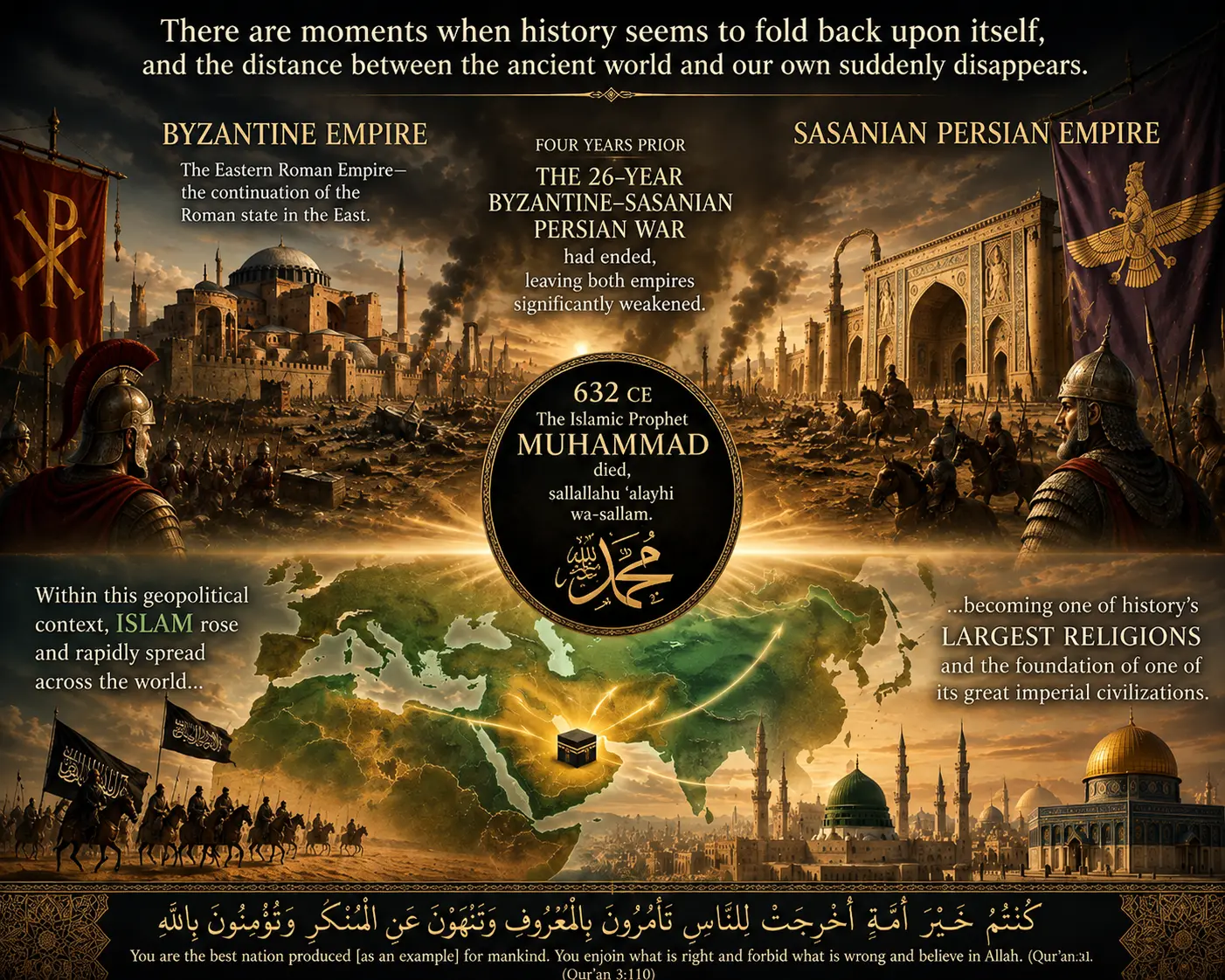
There are moments when history seems to fold back upon itself, and the distance between the ancient world and our own suddenly disappears. The Islamic Prophet Muhammad died in 632 CE, ṣallallāhu ʿalayhi wa-sallam. Four years prior, the 26-year Byzantine–Sasanian Persian War had ended, leaving both empires significantly weakened. The Byzantine Empire was, in fact, the surviving Eastern Roman Empire—the continuation of the Roman state in the East. Within this geopolitical context, Islam rose and rapidly spread across the world, becoming one of history’s largest religions and the foundation of one of its great imperial civilizations.
The United States and the broader Western world have been vying for influence and control over modern-day Persia since the early 20th century, and have been in conflict with the Islamic Republic of Iran since 1979—that is now 47 years. Today, the world sits at a fork in the road. On 1 March 2026, the United States and Israel attacked Iran in the hope of overthrowing its government. This failed. It was a brutal, unprovoked attack that included the killing of schoolchildren. The United States now approaches its November midterm elections with a majority of Americans, and much of the world, opposed to the war.
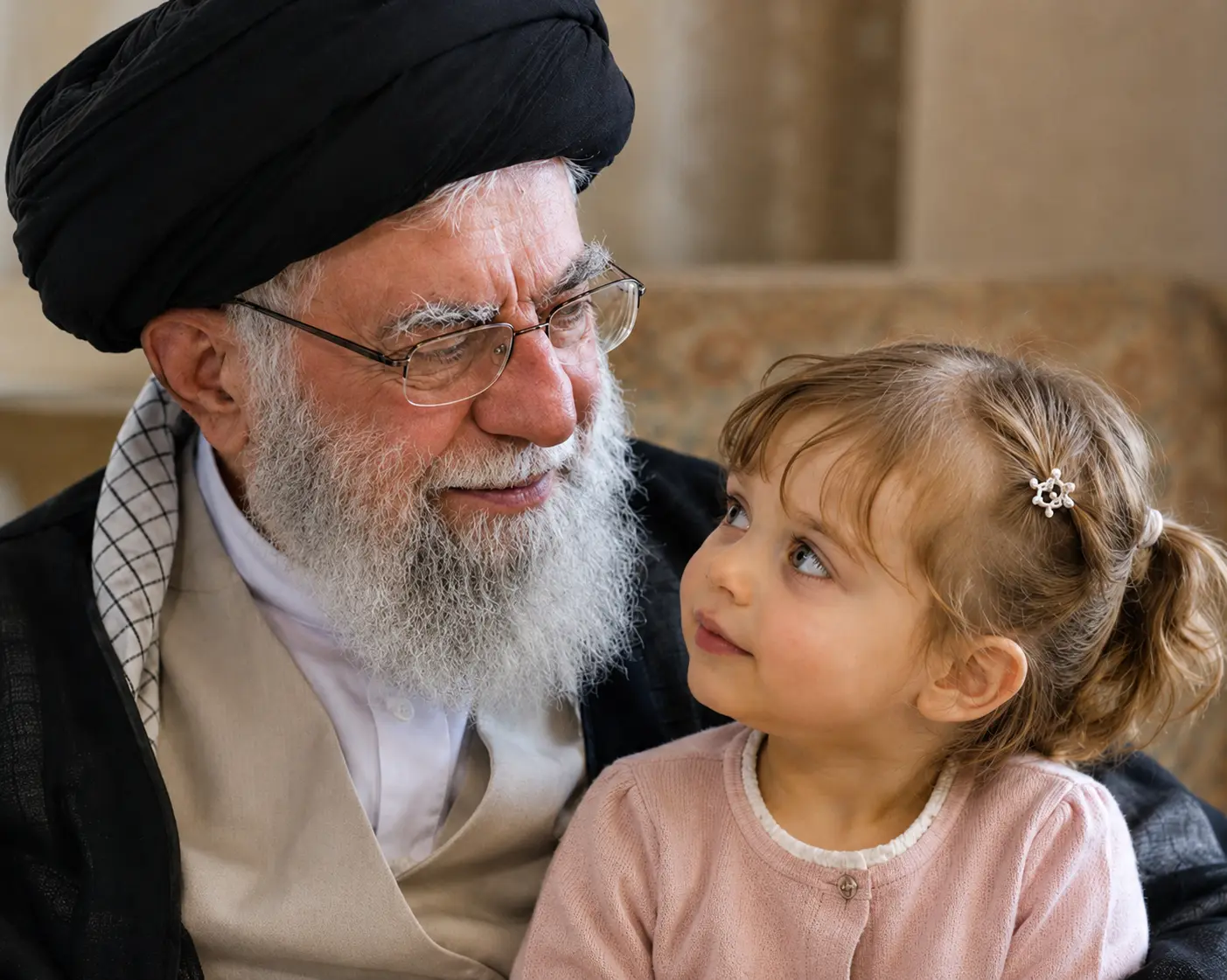
Everyone knows that Israel and the U.S. murdered Grand Ayatollah Ali Khamenei, his family, and many others. What the West doesn’t seem to understand is that this forces Iran to play its hand strongly against Trump politically. This means it will likely adopt offensive retaliation to maximise negative perceptions of Trump over the war and therefore influence U.S. voters. Trump will then likely respond in a way that protects his image as a strongman. If not, he will almost certainly retaliate after the election if his political capital is adversely affected.
This scenario will likely involve heavy U.S. attacks on Iranian civilian infrastructure, followed by Iranian retaliation against Gulf infrastructure. This creates a risk that the new Saudi-Pakistan-Turkey defence arrangements become relevant, potentially drawing additional states into the conflict. The result could be an extremely intense regional war involving multiple nuclear powers. All as a result of Israel’s war, its goal of continuing the genocide of the Palestinians, and its ambition to become a regional hegemon. Israel starts the war, and its enemies destroy each other, you really couldn’t make this up.
Iran’s dilemma is that it cannot avoid maximising its offensive retaliation against Trump politically and utilising the midterm vector. If it chose not to, it would be perceived as weak, and Trump would simply intensify offensive operations after the midterms. But if it does, it risks the heart of Islam destroying itself at the behest of Zionists.
And this is where the 628 CE historical analogy becomes pertinent: a new global power emerged from the ashes of a prolonged and intense war between the two great powers of the time—the Eastern Roman Empire and the Sasanian Persian Empire.
Today, China is already a great power, but remains, to some degree, a near-peer competitor to the United States. China would undoubtedly be affected by the destruction of Middle Eastern oil infrastructure, but its reliable Russian energy supplies, electrification revolution, and strategic petroleum reserves would all mitigate the impact.
The goal of destroying the Russian Federation through the Ukraine war appears to have failed, and it’s impossible to imagine Ukraine defeating Russia militarily. Russia will achieve its war objectives eventually. However, the U.S., U.K. and other European states will try to prolong the war for as long as possible, using Ukraine as a test bed for drone and other weapons development, as well as for gaining tactical warfare experience.
Once Russia achieves its territorial objectives, it could shift its military configuration towards a more defensive posture and focus increasingly on interception. However, even if Russia secures its initial territorial goals, as long as Ukraine retains the capability to launch drones and missiles deep inside Russia, Moscow may conclude that its required buffer zone must continue expanding. This could, in turn, lead Russia to keep extending its territorial objectives and NATO using Ukraine as a war front against Russia.
Zelensky’s desire for additional air defences appears genuine, but it is unclear how effective they are at this stage. Ukraine may be conserving its remaining air-defence systems to prevent the Russian Air Force from achieving greater freedom of operation over Ukrainian territory.
The broader point is that Ukraine and NATO may be prepared to tolerate increasingly severe drone and missile bombardment of Ukrainian infrastructure if doing so allows the war to continue while preserving Ukraine’s capacity to conduct deep strikes against Russian infrastructure. If that is the strategy, the duration of the war could eventually depend less on battlefield developments and more on whether ordinary Ukrainians remain willing to endure the costs of continuing the conflict, or whether domestic opposition to Zelensky and the war intensifies.
Russia will ultimately achieve its objectives, while NATO—or at least some European states—will seek to prolong the conflict against Russia and continue developing capabilities for penetrating Russian airspace with drones and missiles. Ukrainians themselves may eventually push for a different course. But, as with most wars, there are unlikely to be any real winners.
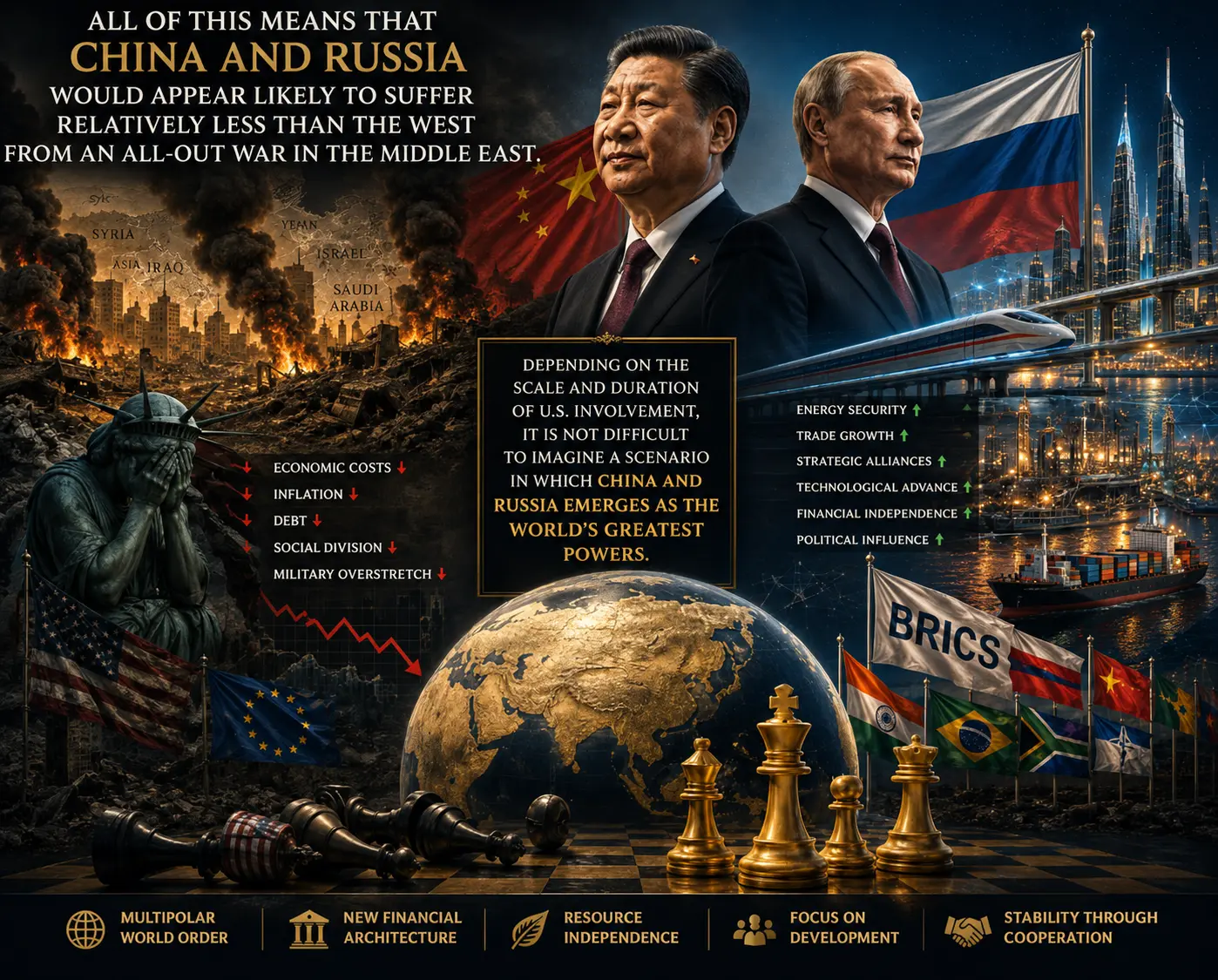
All of this means that China and Russia would appear likely to suffer relatively less than the West from an all-out war in the Middle East. Depending on the scale and duration of U.S. involvement, it is not difficult to imagine a scenario in which China and Russia emerges as the world’s greatest powers.
And all this will be decided in the next couple months.
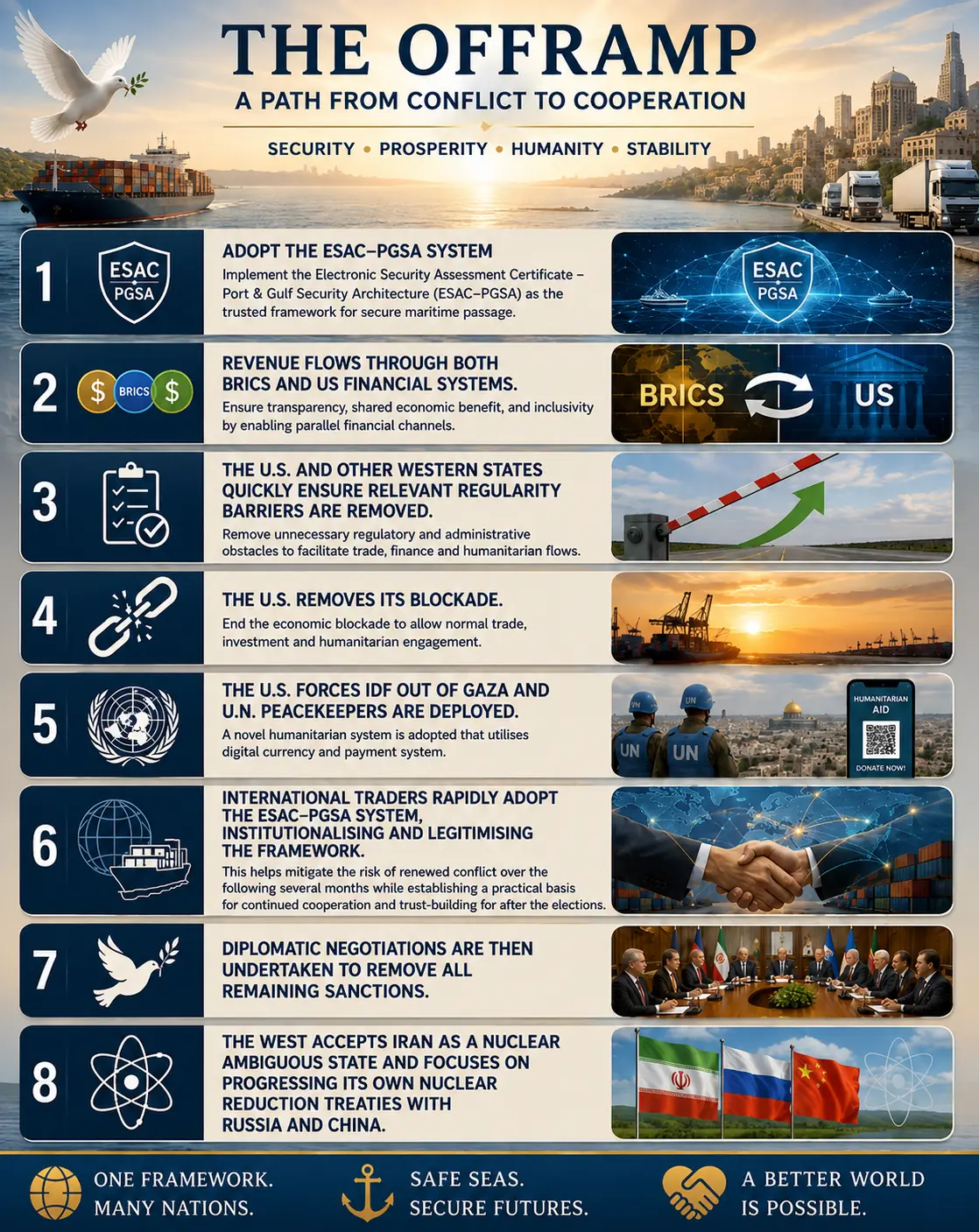
There is an off-ramp, but it requires compromise from both sides and for the West to stop dehumanising Iran, Palestinians, Hezbollah, and the Houthis. Iran needs war reparations as both a deterrent and a trust-building mechanism, but Trump cannot politically accept the “toll” system. The best option, therefore, is to adopt an independent security architecture that collects a service fee, with revenue predominantly, but not exclusively, flowing through the BRICS financial system back into Iran and the broader region. The revenue would be used to invest in Iran and provide humanitarian aid to Gaza.
The offramp
- Adopt the ESAC-PGSA system
- Revenue flows through both BRICS and US financial systems.
- The U.S. and other Western states quickly ensure relevant regularity barriers are removed.
- The U.S. removes its blockade.
- The U.S. forces IDF out of Gaza and U.N. peacekeepers are deployed. A novel humanitarian system is adopted that utilises digital currency and payment system.
- International traders rapidly adopt the ESAC–PGSA system, institutionalising and legitimising the framework. This helps mitigate the risk of renewed conflict over the following several months while establishing a practical basis for continued cooperation and trust-building for after the elections.
- Diplomatic negotiations are then undertaken to remove all remaining sanctions.
- The West accepts Iran as a nuclear ambiguous state and focuses on progressing its own nuclear reduction treaties with Russia and China.