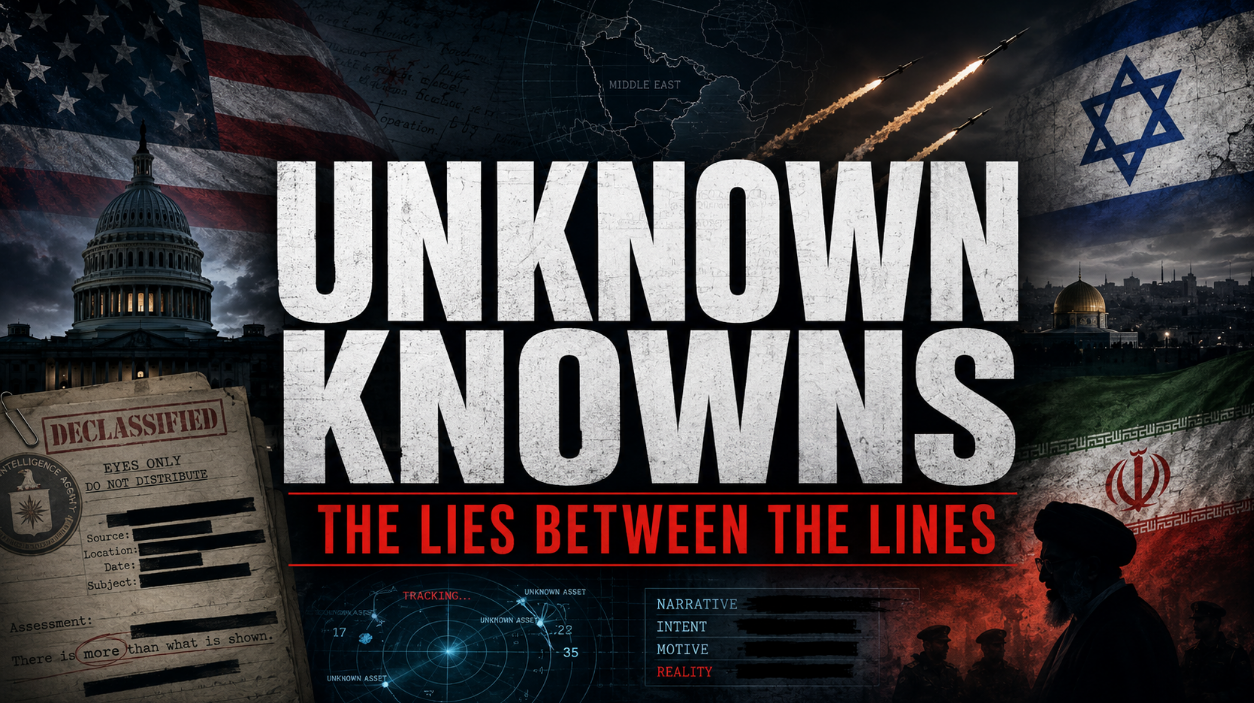
Unknown Knowns: The Lies Between the Lines
Missile defence doctrine, strategic ambiguity and a proposed cooperative security framework.
Read the feature →Now live · Public testing
The Customer ESAC Portal is now open for public testing. Create an account, prepare and submit voyage applications, invite or link crew, respond to PGSA review, track each decision and receive auditable payment and certificate records through one secure workflow.
Missile defence doctrine, strategic ambiguity and a proposed cooperative security framework.
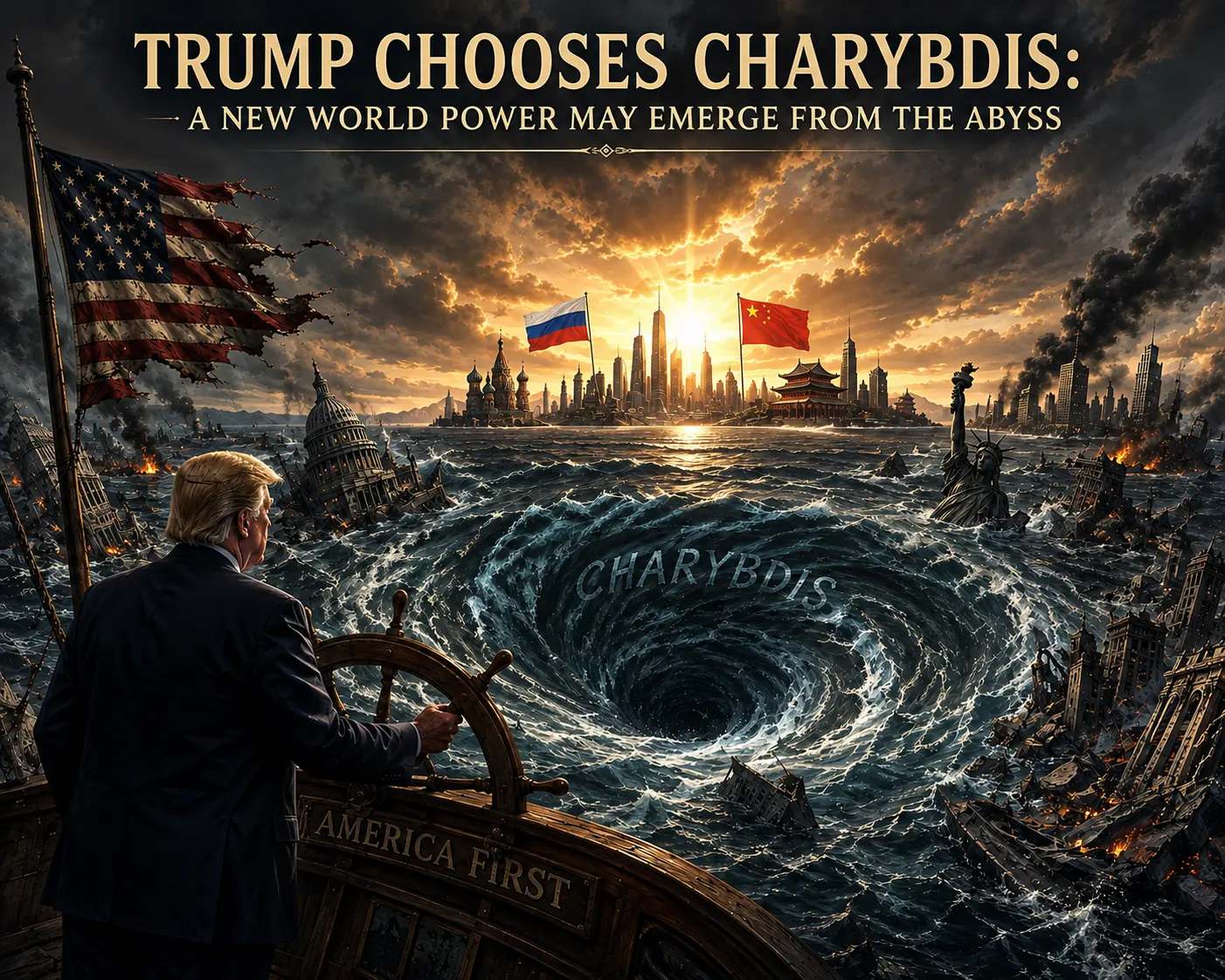
Read the feature →A historical analogy for a widening Middle East war, its potential consequences for the global balance of power, and a proposed diplomatic off-ramp.
Read the feature →A Bronze Age-inspired vision for Australian housing, digital investment and a new generation of Western Australian energy infrastructure.
Read the feature →Geopolitics · Petroleum · Trade
Independent analysis of conflict, energy systems and commodity flows—grounded in technical detail and built for readers who want to examine the evidence.
Recent Briefs

The Brief
01
A closing diplomatic window links Hormuz energy security, Gaza reconstruction and the political consequences of the US midterms.
11 August 2026
The Brief
02
A new regional balance capable of deterring Iran, constraining Israel and reducing dependence upon American decisions.
9 August 2026
The Brief
03
Iran’s emerging Persian Gulf security architecture brings the Hormuz confrontation back to a political question: what kind of deal will Trump accept?
7 August 2026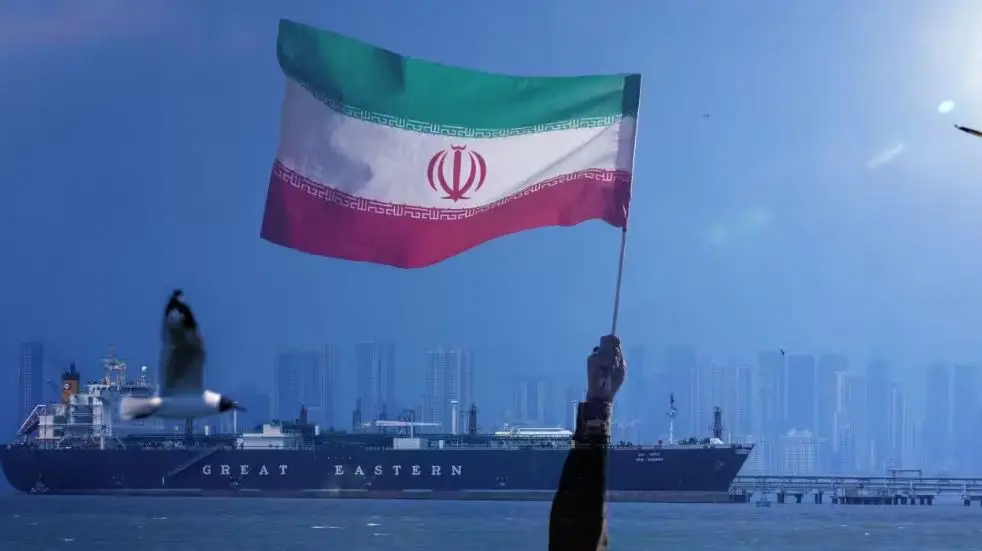
Previous Brief
04
Three scenarios for the Strait—and a proposed security architecture intended to reconcile deterrence, reparations and de-escalation.
5 August 2026
Authorized ESAC authentication
The Scylla & Charybdis ESAC platform is developing a transparent, voyage-specific security-assessment and certificate-verification workflow for physical commodity trade.
Designed for real cargo transactions, ESAC provides voyage-specific security assessment and protected authentication—allowing public users and transaction counterparties to check a certificate’s cryptographic integrity, current platform status and recorded voyage details, including for shipments operating through the Persian Gulf and Red Sea.
Current analysis
Evidence-led assessments that separate confirmed developments, credible inference and unresolved claims.
The Iran war, electoral politics and energy security converge in a strategic dilemma over escalation, restraint and the route toward settlement.
Read the article →Structure defines the limits of action. Human judgement determines how those limits are navigated—and sometimes transformed.
Read the article →Voltaire’s garden as a metaphor for the political, human and financial capital that shapes institutions, influence and modern conflict.
Read the article →Defensive restraint, sovereign deterrence and legitimate physical energy trade as foundations for strategic hedging and mutual benefit.
Read the article →Breaking Security Alerts
Rapid factual updates distinguishing official attribution from independently established evidence.
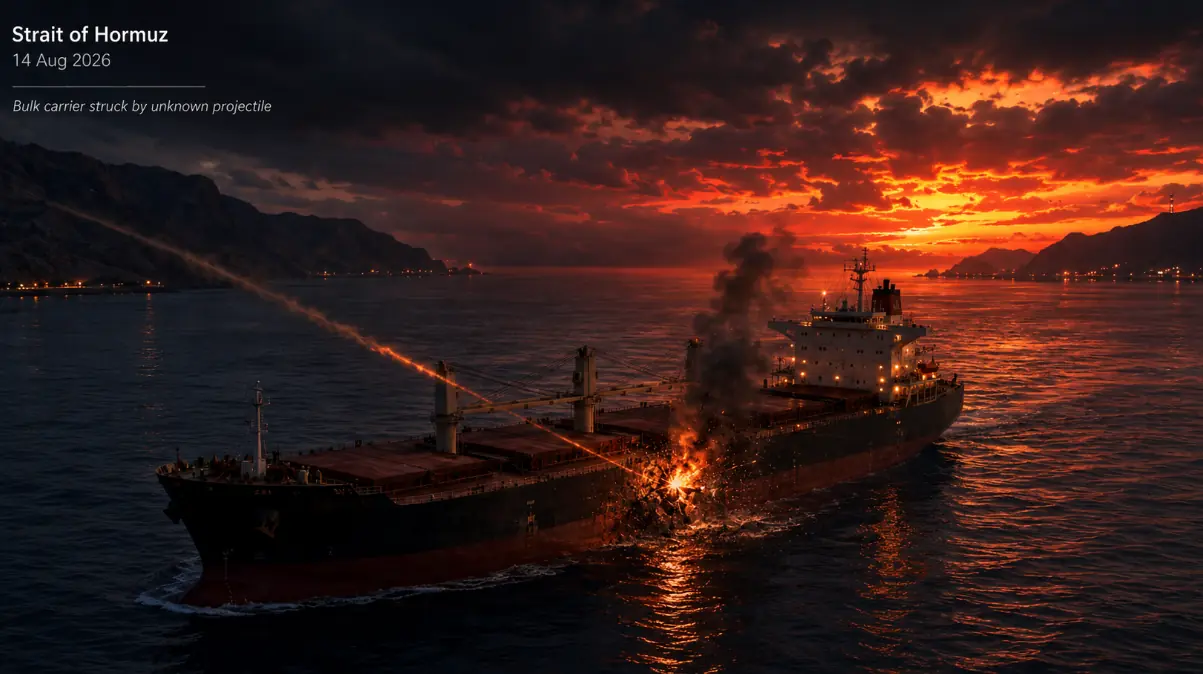
A bulk carrier was struck by an unknown projectile while operating in the Strait of Hormuz on 14 August 2026. The projectile reportedly impacted the vessel’s hull, although the extent of the resulting damage had not been determined when the incident was reported.
All crew members were confirmed safe and accounted for, while any potential environmental impact remained unknown. UKMTO did not identify the vessel or attribute responsibility for the attack.
The incident adds to a series of recent attacks on commercial shipping in and around Hormuz, further highlighting the continuing risks confronting vessels transiting the strategic waterway.
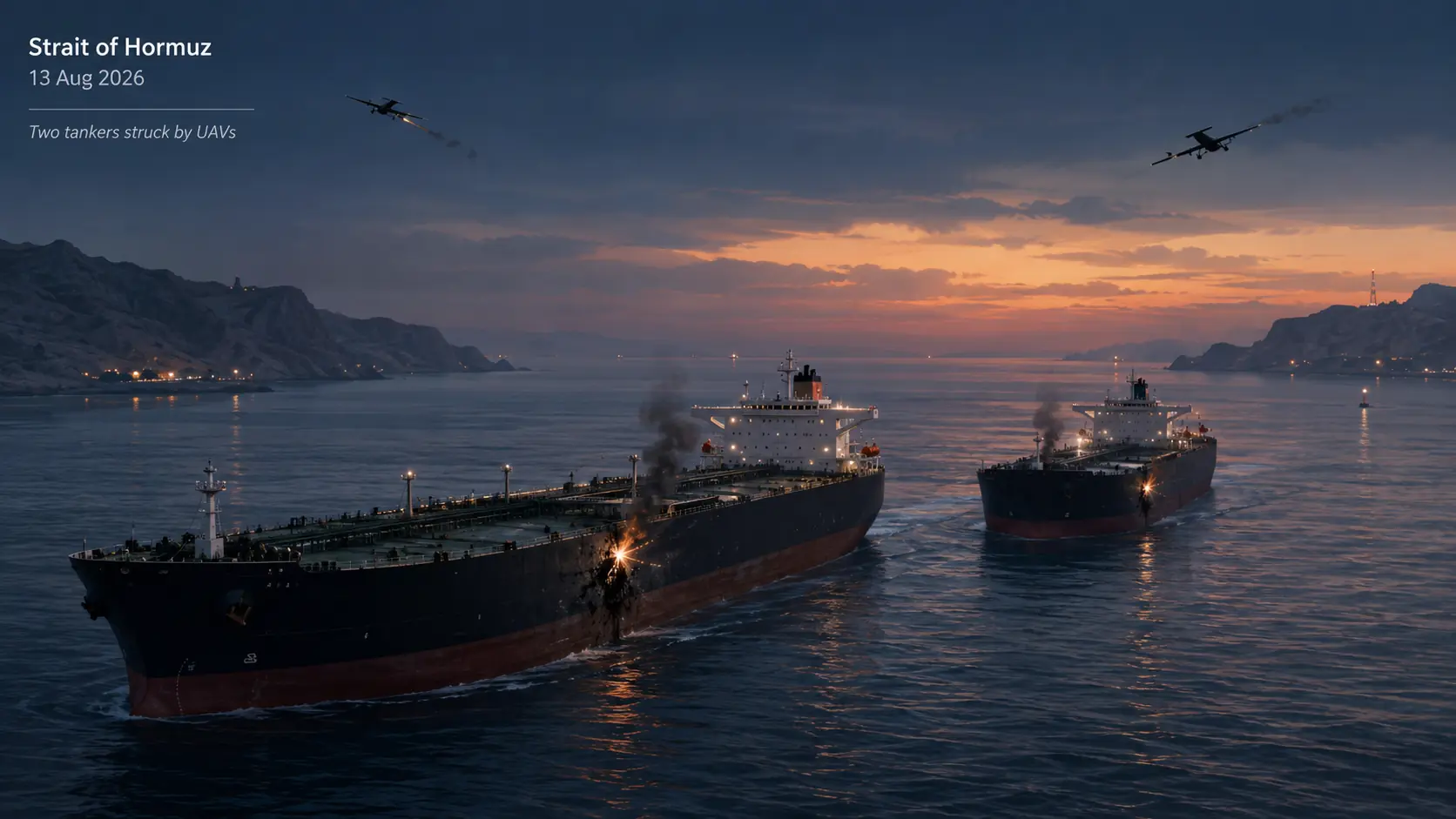
UKMTO reported that two tankers were struck by uncrewed aerial vehicles while conducting outbound transits of the Strait of Hormuz on 13 August 2026. Both vessels sustained minor damage, with all crew reported safe and no environmental impact.
ADNOC later confirmed that two of its vessels had been attacked while transiting the strait. The UAE blamed Iran and described the incidents as acts of piracy by the Islamic Revolutionary Guard Corps, although UKMTO itself made no attribution.
The attacks came amid sharply reduced commercial traffic through Hormuz, reinforcing concerns over maritime security and disruption to Gulf energy exports and shipping.
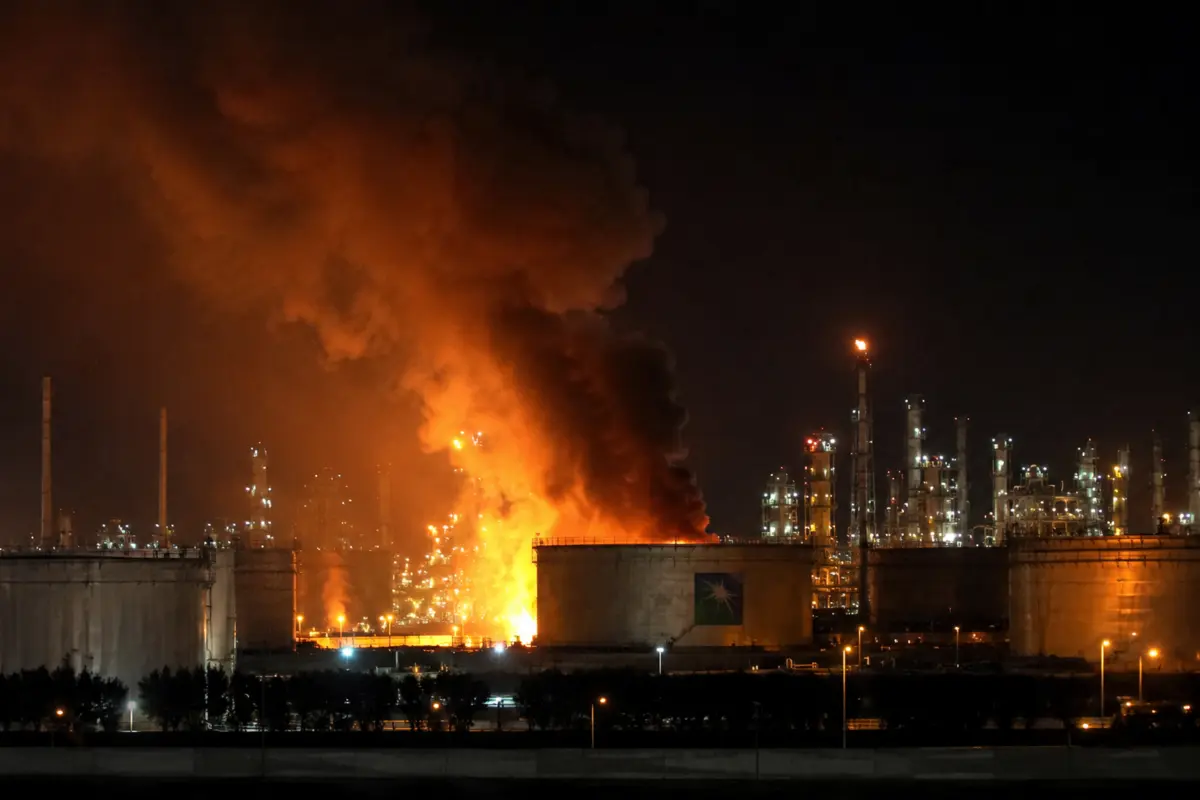
On 9 August 2026, Yemen’s Ansarallah (Houthis) claimed a drone strike against Saudi Aramco’s Jazan refinery in southwestern Saudi Arabia. Saudi Arabia’s Energy Ministry separately confirmed that a fire occurred at an Aramco facility in Jazan early Sunday and was extinguished without reported injuries, but did not attribute the incident to the Houthis.
The approximately 400,000-barrel-per-day refinery was already recovering from damage following a previous Houthi-claimed attack on 25 July. The extent of any additional damage from the latest incident, and its potential effect on the refinery’s anticipated restart, remain unclear.
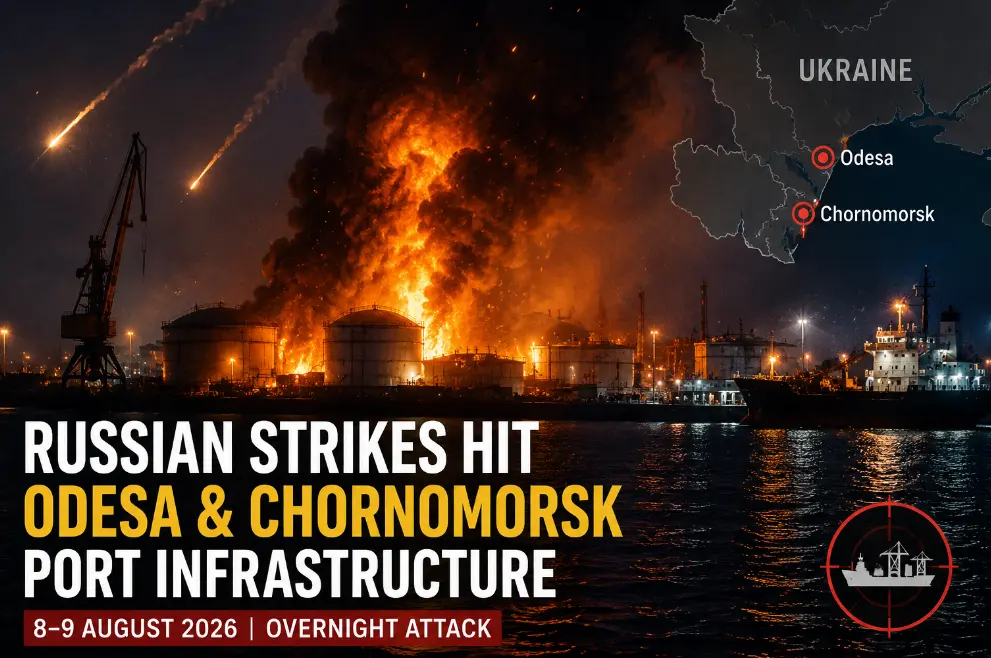
Overnight on 8–9 August 2026, Russian forces struck port and fuel infrastructure in Ukraine’s Odesa region, including facilities at Odesa and Chornomorsk.
Russia’s Defence Ministry said the operation used precision-guided weapons and attack drones, targeting fuel-storage facilities, vessels and other port infrastructure. Moscow claimed the targeted facilities were being used to support Ukrainian military operations.
The extent of damage and the status of vessels in the affected ports remain unclear. Russia’s claims regarding the military use of the targeted infrastructure have not been independently verified.

On 8 August 2026, an ADNOC-linked oil tanker was struck by a missile while transiting the Strait of Hormuz. ADNOC confirmed that the vessel was hit in the early hours of Saturday and said the situation was brought under control, with no crew members injured.
The UAE Foreign Ministry attributed the strike to Iran and described attacks on commercial shipping as “acts of piracy.” At this stage, however, no publicly available evidence has independently established that Iran was responsible for the strike.
The incident follows a broader series of attacks on Emirati shipping during the current conflict. ADNOC stated a day earlier that 15 of its vessels had previously been struck by missiles or drones, resulting in 20 injuries and one death.
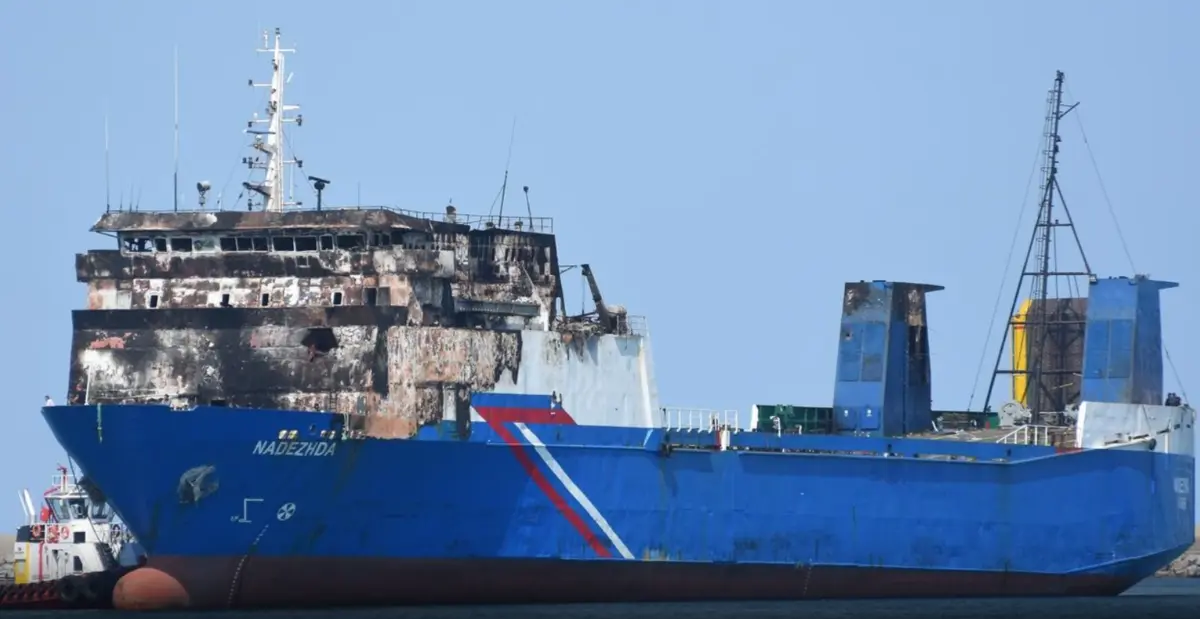
On 3 August 2026, the Turkish-owned, Cameroon-flagged Ro-Ro cargo vessel Nadezhda was struck by a drone approximately 20 nautical miles off Russia’s Black Sea coast near Novorossiysk.
Three crew members were seriously injured and all 22 personnel aboard were evacuated to Russia. The strike caused a fire in the vessel’s bow, which continued burning following the evacuation.
Nadezhda was reportedly sailing from Novorossiysk toward Samsun, Türkiye, when the incident occurred. The party responsible for the drone strike has not been independently established.
Türkiye subsequently expressed concern over attacks affecting civilian shipping and called for measures to protect commercial navigation in the Black Sea.
ESAC voyage assurance
An Enhanced Security Assessment Certificate (ESAC) is a private, voyage-specific security assessment and digital certificate for a proposed maritime shipment. Within the Scylla & Charybdis platform, an authorized independent Persian Gulf Security Agency (PGSA) reviews the applicant, cargo, vessel, route, transit window, supporting evidence and other relevant information; may request modifications; and decides whether to grant or deny an application and whether an issued ESAC should later be suspended or revoked. When a certificate is issued, its public verification record can be used to check its cryptographic integrity, current platform status and recorded voyage details.
An ESAC is not a governmental permit, safe-conduct, immunity, command, guarantee of safe passage, sanctions clearance, insurance approval or substitute for any authorization required by a competent authority. It supplements rather than replaces sanctions screening, vessel vetting, insurance, contractual due diligence and compliance with applicable law.
After the recorded transit, the voyage can be marked complete and the certificate retained as an auditable record of the assessment, certificate status and transit history.
ESAC workflow
Regional security independent associates
Explore the developing independent regional associate framework: an independent Persian Gulf ESAC-issuing agency, supported by independent broker associates that provide commercial access and coordination across multiple countries.
Regional focus
Editorial purpose
“Neither alarmism nor complacency. The task is to identify what is known, what is probable, and what remains uncertain.”
Scylla & Charybdis is an independent platform examining the intersection of geopolitics, energy, maritime security, petroleum, trade and emerging technology. It combines long-form analysis with technical resources and the development of practical frameworks for navigating complex commercial and strategic environments.
The Enhanced Security Assessment Certificate (ESAC) system is now live for maritime transit applications. Independent security assessment is kept at arm’s length from commercial activity, while the ESAC system provides the digital application, audit and certificate-validation framework. Its purpose is to make decisions, communications and certificate status transparent and verifiable while preserving the distinct roles of applicant, assessor and validator.
Editorial analysis, technical material and developing commercial services are clearly distinguished, with uncertainty, corrections and relevant conflicts disclosed where appropriate.